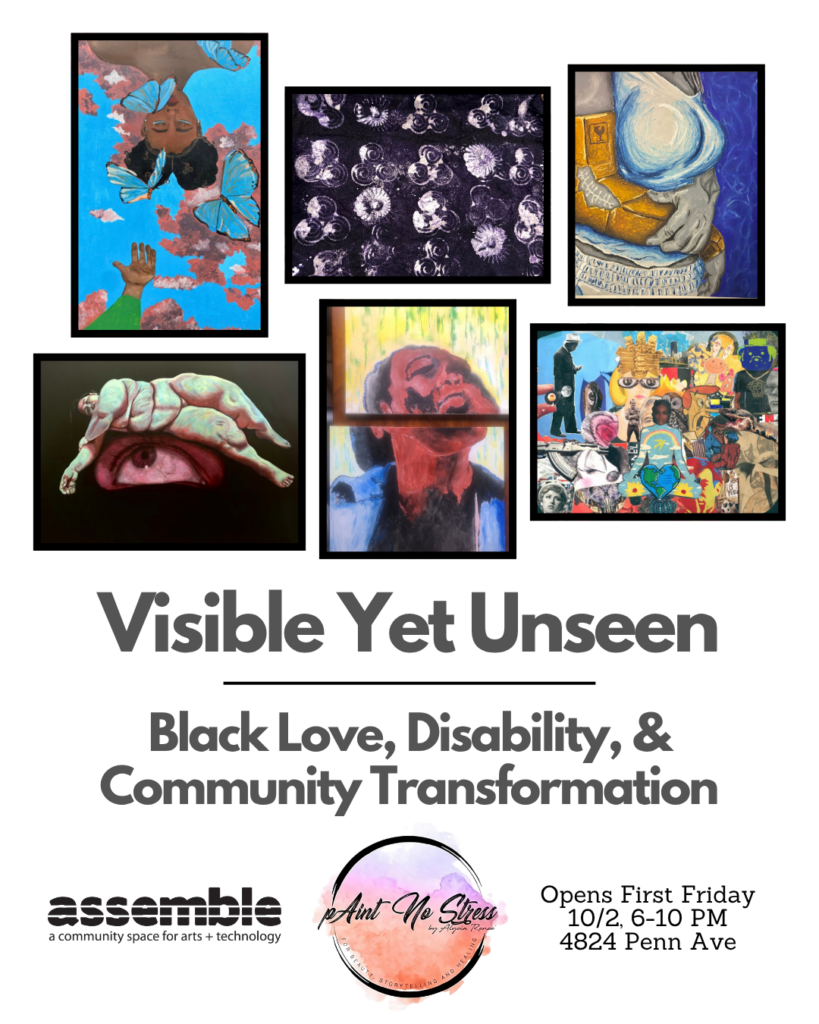
Visible Yet Unseen: Black Love, Disability, & Community Transformation
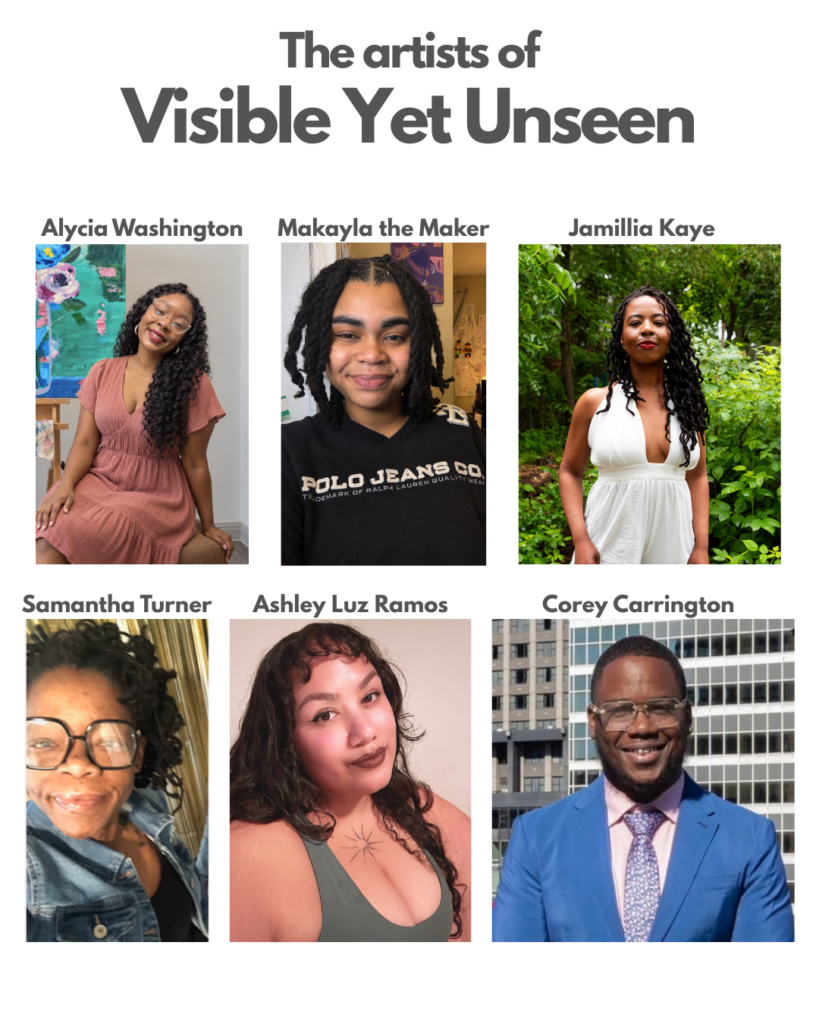
Alycia Washington
Corey Carrington
Jamillia Kaye
Ashley Luz Ramos
Makayla McClendon
Samantha Turner
Visible Yet Unseen: Black Love, Disability, and Community Transformation is rooted in the belief that disability and neurodivergence must be discussed and advocated for more openly within Black and Brown communities. Too often, we are expected to remain endlessly strong, productive, and resilient, even when our minds or bodies are telling us that we cannot continue in the same way. Many people want to work, contribute, and be recognized for their abilities, yet still encounter environments unwilling to understand their needs or see their full worth.
Through art, Visible Yet Unseen makes room for people living with visible and invisible disabilities, chronic conditions, mental health experiences, neurodivergence, and other access-related experiences. It also honors the loved ones, advocates, educators, employers, caregivers, and community members willing to listen, learn, and help create change.
Alycia Washington is a Pittsburgh-based, self-taught multidisciplinary artist, spiritual advocate, creative facilitator, and founder of pAint No Stress. With a background in social work and community engagement, she uses art, storytelling, and shared experiences to explore identity, mental wellness, disability, neurodivergence, belonging, and community connection.
“This exhibition grew from years of feeling as though I did not fully belong. Being different did not always bother me, but that feeling became harder to carry in professional spaces, where I often struggled to find resources, understanding, or support. For a long time, I did not have language for what I was experiencing. Other people sometimes minimized it or assumed that I should already know how to locate resources for something I had not yet recognized or understood within myself. It was only through encountering the right articles, people, conversations, and information that I began developing a clearer picture of who I am and why I experience the world as I do. That understanding has also required me to unlearn many of the rigid, cookie-cutter expectations I had absorbed about how people are supposed to think, communicate, work, and move through life.”
Visible Yet Unseen: Black Love, Disability, and Community Transformation is not the conclusion of the conversation. It is the beginning of what can grow beyond the gallery to enter workplaces, schools, homes, friendships, families, and community spaces. Our hope is that people will leave feeling seen, less alone, and more prepared to imagine communities in which difference is understood, support is accessible, and every person’s worth is recognized.